Saturday, January 7, 2012

Waiting for your call~

Haha okay haven't really visited this blog in a while. Heard the songs I put on my playlist and suddenly fell in love with them all over again <3 Few people actually know about this blog so okay I don't have to be like so conscious about what I write. Which is a good thing cuz I dont like to be restricted. Haha like now, just letting the thoughts flow, useless rant really but who cares.


Argh anyway school starts!!! But this holiday was the best throughout my history of holidays. Did a lot of meaningful stuff with my friends :D Example: Beijing trip! Polo friends and the best! Haha and of course a certain someone I met who changed my life. OMG miss the holidays already, wish everyday could be like those days that seems far away. Sec 4 already, have to actually study, can't continue my happy-go-lucky ways. Sigh oh well, time to stretch those sleeping brain muscles. So many subjects my gawd, going to faint. x.x


But 一山比一山高 just heard from this friend that she has 11 subjects! Scary and crazy. But if it's her she can do it :) She was always the hardworking kind. GPA of 3.8 haha That's all. Have to prepare for my new tuition. Bye bye~

Back?

Okay this used to be a school thing. Like only for school purposes but I decided to make this personal. Or it'll kind of be like a waste. Not sure if I'll update regularly though but I'll try my best! :D

Friday, August 20, 2010

Hwa Chong's New System

Hi people. In this post I would express my views on the current grading system in HCI that starts from my cohort (Sec 2 2010) onwards.

Basically, in contrast to last year's system, 2 new subjects are added to our already extremely heavy burden. Oral Communications and Independent Studies that is made up of ACE and Project's Work. Oral Communication also consists of CA(Current Affairs) Panel discussion, interview and OP. OP stands 40% and CA 30%.The objective of this change was to supposedly stop us from "artificially inflating" our grades with ACE and OP. Personally, I have objection to this as I also think that using ACE and OP to inflate our score and year end MSG is not right.

However, I strongly disagree with the requirements of staying in IP next year in Sec 3. I feel that it is not fair, considering that we were told on short notice. Yes, we were told of the change in the system but we weren’t told about the requirements at all. I feel that adding in IS and OC as two new subjects is a feasible solution to the problem of artificially inflated scores, however they should not be a burden to us and prevent us from going to Sec 3 IP class. Like what was brought up during the assembly, there are always minorities who can’t speak up, be it because they’re shy or they’re afraid that their friends would laugh at them in case they say something wrong. This is not fair to them at all. Just because they are not as vocal as others does not mean that they deserve to go to an O level class!

Similarly, those who do not have enough ACE, could have their own reasons too. Of course if they’re just lazy, then they should go 3Q as they are not independent enough to stay in IP. However, they are some who are struggling to juggle their studies and various commitments such as Ep3s and the student council. As a result, it’s not surprising that they have neglected ACE simply because they have too much on their hands.

Therefore, my stand is the school should remain as the current system, however, the requirements definitely have to be lowered or there’ll be a sudden increase in 3Q students.

Wednesday, August 18, 2010

Singlish Our National Language?


"Dis country weather very hot one."
"Dat person there cannot trust."
"He play soccer also very good one leh."

Hi readers, I suppose all of you should know about "Singlish".

Singlish, sometimes known in the academic community as Singapore Colloquial English, is an English-based creole language spoken in Singapore.

As a student, I can say that Singlish is strongly discouraged in schools at a governmental level as it is believed to hinder the proper learning of proper English. For many students, using Singlish is also inevitable when interacting with their peers, siblings, parents and elders as it has becomed a bad habit since young.

Singlish derives its roots from the 1819 of British colonial rule over Singapore. During that period of time, many foreigners came to Singapore for trading purposes. British English was then spoken, but not long after immigrants moved in, the language became influenced by them. Therefore, Singlish now consists of Malay, Hokkien, Mandarin words which then make Singlish not a formal way of communicating.

Frankly speaking, I feel that it is quite impossible to eradicate Singlish as it is just natural that we say a few "la" and "lo" during conversations. Even so, the government has already tried to promote the use of standard English instead of Singlish, but it was to no avail.

As a permenant citizen of Singapore, I feel that Singlish makes Singapore unique in a way that we have somewhat created our own nation's language.

"Ei brudder, come on la. Guo Qing Ri just past le, you dunno meh. Wa, you balik kampung la."

Egypt Gods

As you all know by now, (or not) I am a huge fan of Rick Riordan, author of the Percy Jackson series. Well, his new book, The Red Pyramid, came out at around early this year but I haven't had the money to purchase it or time to read it for that matter.

I'm largely influenced by him and have taken an interest to Egyptian gods as well. After doing my own mini research, I found that Egyptian gods have unique names and powers. They are tied in closely with animals too. Their tales are told on the writings that are inscribed on the inside of the Egyptian pyramids. In this post I'll be listing the gods and their features. Also the story of how the gods were born if I have time. :D

The Egyptians believe that some gods and goddesses took part in creation, some brought the flood every year, some offered protection, and some took care of people after they died. Others were either local gods who represented towns, or minor gods who represented plants or animals.

The ancient Egyptians believed that it was important to recognise and worship these gods and goddesses so that life continued smoothly.


Here's the list of the Egyptian Gods (In brackets are their features briefly):
God of Sun, Ra (Head of falcon and sun disk)

God of Music, Hathor (Horns of cow and sun disk)

God of Destruction, Sekhmet (Head of lion)

God of Sky, Nut (Blue with golden stars)

God of Earth, Geb (Colour of plants and Nile mud)

God of Dead, Osiris (Dressed in white with crook and flail)

God of Desert, Seth (Animal head with long curved snout)

God of Pharoah, Horus (Head of hawk and crown of Egypt)

God of Magic, Isis (Throne on head or holding baby)

God of Wisdom, Thoth (Head of ibis--A type of bird)

God of Embalming, Anubis (Head of jackal)

God of Justice, Ma'at (Feather in her hair)

God of Creation, Amun (Crowned with feathers)

God of Cats, Bastet (Head of cat)

That's all for the listing of major gods in Egyptian mythology. I posted some of the pictures of the more prominent gods but I would suggest that if you are interested, you could look for the pictures of these gods. Their appearances are certainly bizarre. If you are interested in the story, here's the link:http://www.ancientegypt.co.uk/gods/story/main.html
It gives a brief overview of the story of how gods came into existence as time does not allow me post the full story for all of you.

If you are simply interested in the gods, this website can help:http://gwydir.demon.co.uk/jo/egypt/index.htm

Well that's it for now. Look forward to the next post!

Tuesday, May 25, 2010

Home Learning Task 2

This is the template that I will be filling up.

Point of View :
The author takes on the point of view of a peace bringer and a child lover as he crticises the act of using children for war. The tone he adopts in the poem proves that he is a vigilante and is against the use of children in war. The repetition of "Could we" in the third stanza shows the simple things in life that normal kids do while the children fighting for war are selfishly deprived of. There is a strong usage of the word "darkness" to convey a sense of gloominess in the children's lives, also to show that each day they are filled with "fear", that they will be killed any moment on the battlefield.

Situation and Setting :
The nature of this poem's conflict is emotional. It happens on the battlefield and the poet is using literary devices to make us seem to pity the children. By stating in the first stanza that "To this door there is no key", he is saying that to these children, cannot escape from war. He tells us that once they are in it, they cannot back out. He also uses personification for war, saying that it can "consume" people. This indicates how easy people lose their lives in war. Also, in stanza 3 he uses repetition to emphasize the fact that how the children cannot do the things that other "normal" children can. The theme of anti-war is conveyed through the strong use of imagery. As war usually affects the whole world, the theme is universal in its application.He also uses the metaphor of "endless thirsty hole" to represent war as a period of great carnage, that war brings about a lot of damage and suffering.

Language / Diction :
The author uses contrasting words like "light" and "dark" to highlight the contrast. He also uses repetition of certain phrases to emphasise on some of the important points that he wants his readers to take note of. He also used some rhetorical questions to let us feel a sense of helplessness. We have the ability to help them under usual circumstances but when they are in a military camp, we can't do anything to help them at all. This evokes our sympathy for them.

Personal Response:
I learnt that children who are left in the dark suffer a lot and are even brought to learn how to fight at times. I felt pitiful and sad for these children who are living in the dark , and also feel very fortunate not to be one of these children. In the modern world , this type of situation can be found in countries like Afghanistan , Iraq and many developing countries , therefore people in those areas will find it easier to understand the poem as they might have experienced the same situation. These children have to face the harsh realities of war at such a tender age and they probably suffered cruelties even adults cannot endure. All in all, through the poem, I pity those children and this poem really evokes strong feelings.

Home Learning Task 1

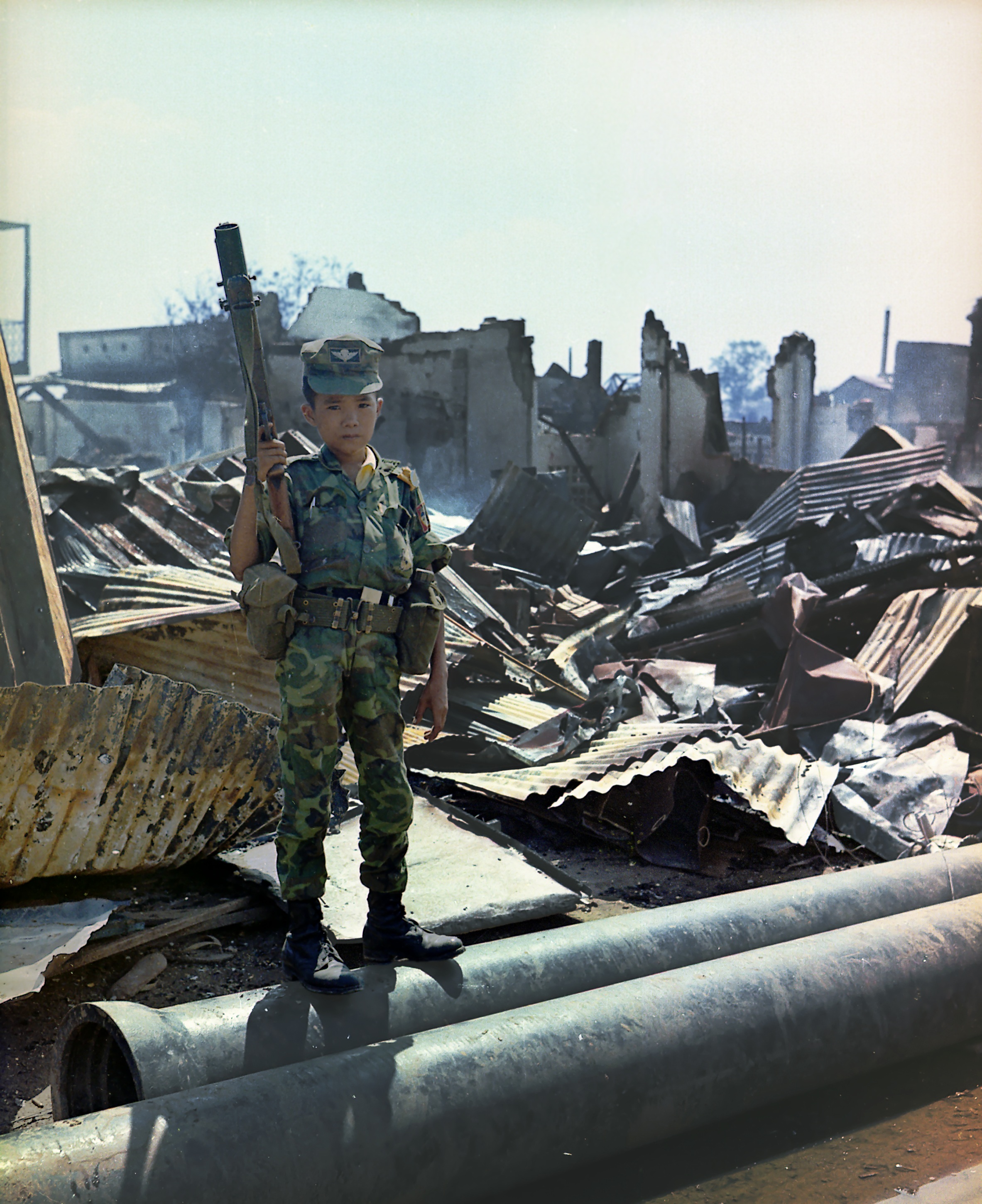
In this post I'm going to analyse the poem Children of the Darkness by Henry Bechtold. This is a recent poem so I couldn't find any analysis online. Considering the difficulty, I would try to analyse the poem myself although it may be wrong, please correct me in the comments. Thanks! Here is the poem itself.
File:Vietnam child soldier.jpg

There are children in the darkness
Who have not seen the light
There are children in the darkness
Who someone will teach to fight

Chalk and blackboards will not be
To this door there is no key
From this life they can not flee
And these children are not free

Could we simply light a candle
Could we give them half a chance
Could we teach them how to read
Could we teach them how to dance

Or will a war consume them
Their body and their soul
Will their life and blood be poured
Down some endless thirsty hole

Back into the darkness
From which there is no flight
Back into the darkness
Into which there shines no light


Analysis:

Introduction:

The author was in Vietnam in 1967 - 68 and again in 1969. He goes back often as he feels a deep connection to Vietnam. He was sitting in his hotel room in Saigon just before Christmas 2009 and he was trying to write a poem about the girls who work in the park and how badly men treat them. he was angry but unable to write anything that did not sound trite or weak. He looked at the TV and the news was on. He did not understand the news reader but in the background was a photo of a small boy with a helmet and an automatic rifle. He got the inspiration and wrote it out under these conditions. This was based on the Vietnam war in the late 1960s. He exploited the horrible conditions that the children in Vietnam in that time had to live through.


Conflict in the poem :

In the first stanza, first line, "There are children in the darkness". This probably means that there are some children who lived their lives in the dark side of the society. For example, smuggling, stealing and other unscrupulous acts. However, in this poem, it refers to fighting in the war at such young and tender age. The children are being forced to join the military and have been in the darkness. The second line, " Who have never seen the light." This explains that the children have never seen the outside world, how normal children should live. Instead, they are imprisoned at military camps, learning how to fight. The third line is a repetition of the first line to emphasise on the point that these children are being kept from the "light", in this case, the outside world. The fourth line, "Who someone will teach to fight." This means that these children are being taught how to fight by the military at such a young age. The persona uses an accusing tone so it seems like he was blaming the one teaching the children.

In the second stanza, "Chalk and blackboards will not be." This highlights the contrast of normal kids and those forced to fight in the war again. Normal kids go to school and learn using blackboards and chalk. However, these children learn how to fight with guns in a war. The last two lines of this stanza, "From this life they can not flee
And these children are not free." This shows that the children cannot escape from this fate.They have no freedom and no say in what they do. Their lives are being controlled and they live only to fight in the war.

The whole of the third stanza's importance lies in highlighting the contrast between normal children and the children in the poem. It means that nobody would teach them the usual things that kids learn, like reading and dancing. Nobody would even give them the chances to experience these.

In the fourth stanza, lines 13 and 14, "Or will a war consume them, their body and their soul."
These lines show concern of the children's lives and future prospects. War is being personified as it can "consume" them, meaning the children would know nothing but how to fight a war. They would learn all the basic skills that a child should be learning at his or her age. Soon their body and their soul will be trained only for war and they would lose the basic skills like communication and others. The next two lines, "Will their life and blood be poured Down some endless thirsty hole." This tells us that the deaths of these children, the blood spilled by them, will all be in vain in the end.

The last stanza keeps repeating the words, "light" and "dark". This is again contrasting between the "dark" life they have been living and the "light" (Future prospects) that eluded them due to the war.

This is the end of my analysis. In the next post, I would apply the template Annex A.