In this post I'm going to analyse the poem Children of the Darkness by Henry Bechtold. This is a recent poem so I couldn't find any analysis online. Considering the difficulty, I would try to analyse the poem myself although it may be wrong, please correct me in the comments. Thanks! Here is the poem itself.

There are children in the darkness
Who have not seen the light
There are children in the darkness
Who someone will teach to fight
Chalk and blackboards will not be
To this door there is no key
From this life they can not flee
And these children are not free
Could we simply light a candle
Could we give them half a chance
Could we teach them how to read
Could we teach them how to dance
Or will a war consume them
Their body and their soul
Will their life and blood be poured
Down some endless thirsty hole
Back into the darkness
From which there is no flight
Back into the darkness
Into which there shines no light
Analysis:
Introduction:
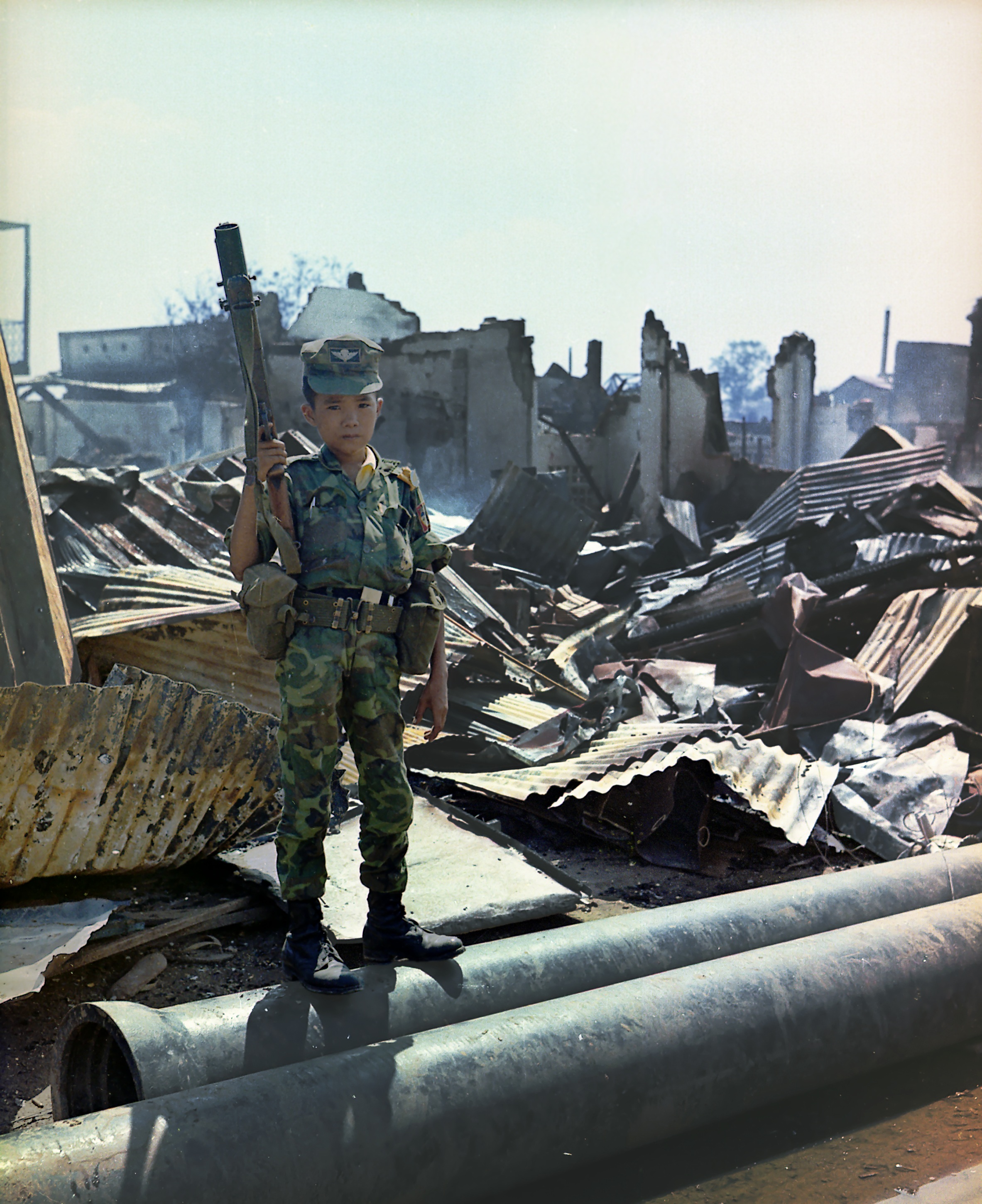
The author was in Vietnam in 1967 - 68 and again in 1969. He goes back often as he feels a deep connection to Vietnam. He was sitting in his hotel room in Saigon just before Christmas 2009 and he was trying to write a poem about the girls who work in the park and how badly men treat them. he was angry but unable to write anything that did not sound trite or weak. He looked at the TV and the news was on. He did not understand the news reader but in the background was a photo of a small boy with a helmet and an automatic rifle. He got the inspiration and wrote it out under these conditions. This was based on the Vietnam war in the late 1960s. He exploited the horrible conditions that the children in Vietnam in that time had to live through.
Conflict in the poem :
In the first stanza, first line, "There are children in the darkness". This probably means that there are some children who lived their lives in the dark side of the society. For example, smuggling, stealing and other unscrupulous acts. However, in this poem, it refers to fighting in the war at such young and tender age. The children are being forced to join the military and have been in the darkness. The second line, " Who have never seen the light." This explains that the children have never seen the outside world, how normal children should live. Instead, they are imprisoned at military camps, learning how to fight. The third line is a repetition of the first line to emphasise on the point that these children are being kept from the "light", in this case, the outside world. The fourth line, "Who someone will teach to fight." This means that these children are being taught how to fight by the military at such a young age. The persona uses an accusing tone so it seems like he was blaming the one teaching the children.
In the second stanza, "Chalk and blackboards will not be." This highlights the contrast of normal kids and those forced to fight in the war again. Normal kids go to school and learn using blackboards and chalk. However, these children learn how to fight with guns in a war. The last two lines of this stanza, "From this life they can not flee
And these children are not free." This shows that the children cannot escape from this fate.They have no freedom and no say in what they do. Their lives are being controlled and they live only to fight in the war.
The whole of the third stanza's importance lies in highlighting the contrast between normal children and the children in the poem. It means that nobody would teach them the usual things that kids learn, like reading and dancing. Nobody would even give them the chances to experience these.
In the fourth stanza, lines 13 and 14, "Or will a war consume them, their body and their soul."
These lines show concern of the children's lives and future prospects. War is being personified as it can "consume" them, meaning the children would know nothing but how to fight a war. They would learn all the basic skills that a child should be learning at his or her age. Soon their body and their soul will be trained only for war and they would lose the basic skills like communication and others. The next two lines, "Will their life and blood be poured Down some endless thirsty hole." This tells us that the deaths of these children, the blood spilled by them, will all be in vain in the end.
The last stanza keeps repeating the words, "light" and "dark". This is again contrasting between the "dark" life they have been living and the "light" (Future prospects) that eluded them due to the war.
This is the end of my analysis. In the next post, I would apply the template Annex A.

No comments:
Post a Comment